Brandy’s Memoir Co-writer Gerrick Kennedy on Their New Book “Phases” and Why “Human” his favorite Brandy Album
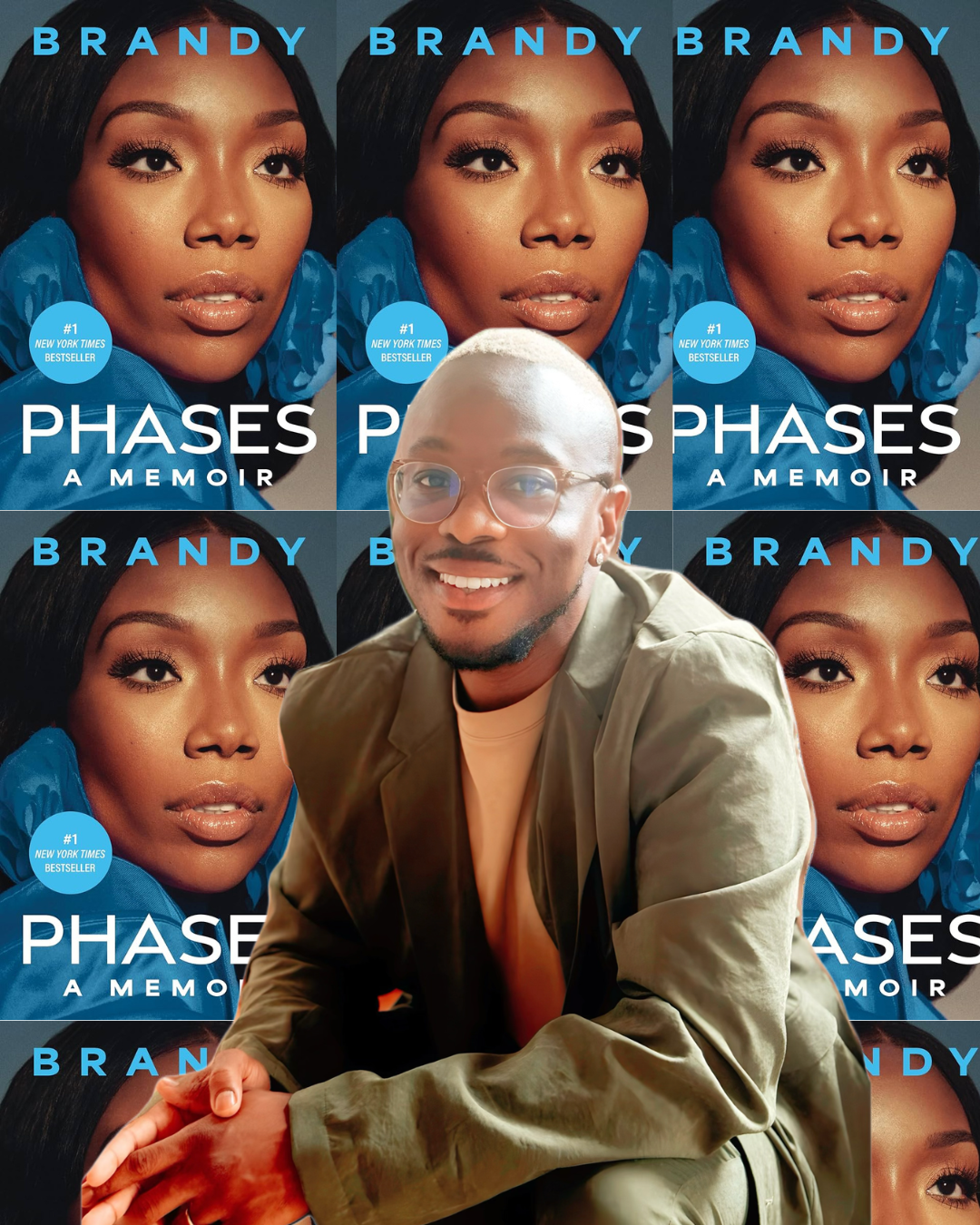
Photo courtesoy of Gerrick Kennedy
NOTE: You are reading a free edition of THOUGHT DAUGHTER. Please consider becoming a memberfor the low low price of $1 dollar monthly or a $50 dollar yearly donation fee or pay me directly here,here or here. Thank you for your support!
Gerrick Kennedy heard a voice one day when he was young. While watching TV with his stepmom, a young Black girl begins to sing on the other side of the screen, leaving Kennedy transfixed. Shortly thereafter, his stepmom buys him Brandy, the self-titled debut album of the young Black girl whose voice he couldn’t get enough of. Even before they’d meet and become friends decades later, Kennedy kept up with the R&B darling, who tore the 90s and early aughts with her successful TV show, Moesha, and her even more successful music career that produced such hits as "I Wanna Be Down,” “The Boy is Mine,” and “Have You Ever.” Through all those years, Kennedy was there, cutting class just to go and buy her album, attending her concerts, coming of age alongside the teen idol who blossomed into a young woman right in front of the world.
With Phases, Brandy’s recently released New York Times’ Best Selling Memoir, the singer and Kennedy (now a journalist and author) come together to look back at the singer’s legacy and all the moments in between the music that have kept fans listening to her for over thirty years. I spoke with Kennedy about his fifteen year friendship with Brandy, how the book came together, and what some of his writing non-negotiables were.
How did you get approached to work on Phases?
Brandy and I have had a personal relationship for fifteen or so years now. When I was working on my Whitney [Houston] book, I knew I wanted her to do the foreword because one of the things that brought her and I closer together, unfortunately, was the tragedy of us being at the Hilton that weekend when Whitney passed away. She grilled me a lot about why I was doing a book, what it was gonna be on, what was the scope, because I had been writing a bunch of stuff about Whitney at the time as well. So I would just talk to Brandy about what the book was going to be and how I thought about her and how I wanted to cover her. She asked if I would ever be interested in doing the same thing with her career because she felt as if people didn't quite understand her. They sort of give her praise, but they don't actually place her in any sort of context with anything that she accomplished, which I found interesting that that's her experience with how we see her. So I say, yeah, I’ll think about it for sure, and whenever you're ready, just let me know because you're alive, so any publisher that we go to with an idea is gonna say, what's her involvement? So it evolved into a memoir, but it started as a critical look at her life and career. That was about six years ago. So it was a pretty long journey with this book.
What's a misconception you had about Brandy before you two really started getting to know one another?
To be honest, I assumed that someone of her level of fame and who has been as famous as long as she has would know everything that's ever said about her. At least the highlights. So that was an interesting experience. There would be times where I'd be like, Hey, so about this, and she's like, what are you talking about? And I'm like, you don't know this thing? How is that possible? But then I started to really learn how she has protected herself and how she's insulated herself from gossip, from criticism, projection, all these sorts of things that you hear certain people do. Like you hear it with Beyonce, you hear it with some of these other artists, and you just are kind of like, yeah, sure, but it is impossible because of our phones and the internet and all this stuff. It was interesting to actually be with someone who, when you're doing something like a memoir, and you're talking about thirty years of somebody's life, where there were so many moments where it's like you had no idea that people knew that happened. That's crazy. So that was my biggest misconception for sure.
What was your approach to helping Brandy write her book? What do you think your role as a co-writer ultimately was?
You're a co-pilot, you are a therapist, you are an archivist. You wear so many hats when you are doing a collaborative project like this. There are so many conversations that you have with a person, and so much of it is going to be: this is me releasing it, and I don't wanna hold this myself anymore. So I'm giving it to you to hold, and now you can carry it with you, but it's not for the book. It gives you context, it gives you ideas, it gives you understanding, but it ultimately just ends up becoming another secret.
My approach to it, because it's someone that I had a deep connection with growing up and as an adult, but then also had a personal connection with, we both came to the table with the list of things that if a book is gonna exist on a shelf with your name and also mine, these are my non-negotiables. These are the things I think you should talk about. I don't think you should put a book out if you don't have those things in there. She had hers. She had the things of this won't be in a book if I ever do it. Which some of those things we arrived to after putting it on the page and then reading it back and her being like, absolutely the fuck not take that out. So yeah, you wear a lot of different hats.
What were the non-negotiables, if you can share that she didn't want you to keep, and the ones that you did keep?
I felt like we really needed to have a real difficult but authentic conversation around Wanya [Morris] and that part of her life. That was the hardest chapter for us to get through. It was working on this where I heard her say the word “groomed” out loud. It was a question to me [she asked], do you think that's what happened? And it's hard when somebody's asking you something like that because they have their own experience. They have what they believed was their truth, but you're also watching someone who had not seen these interviews that he had done, had not seen the way that he speaks about her, speaks about that time. That was really jarring, especially as someone who's been in those same shoes. And I think a lot of us have been, which is why I felt like we should have this in the book because a lot of people can connect to that story, unfortunately.
If I can say one that I thought should have stayed but was going to not…I know for her, her biggest thing was she wanted the world to understand the sacrifices of what it took to be this Black girl who kind of opened these doors in a different kind of way, who was this multimedia brand. She really wanted that to come across. She really wanted the trauma of that to come clear. She really wanted people to understand how she felt out of control in terms of achieving these things. And by out of control, I mean, I'm gonna say yes to everything and not say no to stuff because I don't think I can or I think I should. She wanted that to be like a really big part of the book.
What do you think was the breaking point in her career?
What I thought was the most interesting thing about the reaction of people with this book is how folks still aren't really honest about how the marriage lie impacted her career, how it changed the perception, how it changed everything. I think people do this thing of like, oh, you didn't even really need to lie about — and it's like, actually no, everybody's proved the point of why the lie existed for the next twenty-four years by bringing it up whenever she sneezes. “Well, remember that time she lied about being married?” It is the thing that people use against her for every single possible thing.
We did this project a couple years ago for Audible…and that's the first time that she had told me she lost these brand deals. I had no idea that that's what went down. I just thought it was like, yeah, it was a scandal, and then we talked bad about you, and then you had to go on Oprah or whatever. Learning that Cover Girl was like, yeah, nah. Mattel is like, yeah, nah. That was insane to me. I remember watching the feeling of it, and it felt like she was treated like this teen mom who had lied about this thing. She was not treated like she was 23 years old. She was a grown adult woman. She was treated like she was 16. That's kind of the way that when you go back to the press and the coverage, and you see the reaction of it that's what it was.
Do you think her being cast in the media and by fans as a “good girl,” especially in opposition to Monica’s seeming bad girl persona, played a part in it?
It played a huge role. And not just that, it was everything we saw of her. Moesha being the type of character that she was. She was very approachable, relatable, but she was also very smart, very witty, and a meddler. She had all these other things, but I think the biggest thing about that time with her was that Brandy vanished, and then Moesha was it. And so when you saw Brandy, all you saw was Moesha. And then Moesha is becoming Cinderella. So every time you saw her, she was in the context of these things that we put on a sort of pedestal that breaking out of is almost impossible.
You weren't gonna see her have sex. You saw Moesha navigate sex, but there was no world in which Brandy can then talk about sex, even though it's kind of in the music, in this like really quiet way. But it's not overt. She couldn't. There was no world in which she could have been. Monica also wasn't overt too. That's the thing that I found so interesting about how people talked about Brandy, Monica, and Aaliyah is the three of them have more similarities than differences. If you're actually looking at the music and the styling of all three of them, they were pretty much really kind of similar. But this idea that Brandy was this goody two shoes was bolstered by, not just the TV shows, but also some of the subject matter and what the singles were. By the time we get to “Sitting Up In My Room,” it's still sort of this teenage kind of a thing. But then, if you look at that video, we're seeing a person who's more elevated in the fashion, but also as a young woman coming into herself and coming into her body. Those things didn't always match up because we still just remembered Cinderella and all the other stuff that goes with who Brandy was for a long part of her career.
You mentioned earlier that you wrote a book about Whitney Houston. Anyone who knows Brandy knows that Whitney was more than a mentor figure to her. Did your writing on Whitney help you contextualize Brandy at all?
Absolutely. It's so challenging because this is again, another thing where you talk about a lesson that I learned was how we have seen them and how we talk about them. “Burden” feels like an unfair word, but it feels like the best word to describe what I see in Brandy when we talk about Whitney, and we talk about that time, and we talk about this responsibility that she holds to carry the legacy. Some of it's been placed on her, but some of it is her being like, I take this as someone who loved this woman and who had this relationship with her.
I felt like the average person, when they go pick up [Phases], they don't necessarily care about the Cinderella stuff, they wanna know what's in the note. I think that pieces like that have become so much of the story that people didn't really necessarily care about anything else in that relationship. And she knows that. I ultimately felt like I didn’t see it as a non-negotiable. I just felt like we can't put a book on a shelf and not talk about that weekend. That would be weird too. As painful as it is. I don't think you owe everybody every single thing about your relationship because so much of it played out. I thought the best we can do to preserve something for yourself is to at least write it so that if you have half a brain, you could figure out what was in the note if you read the chapter and read the whole story.
People are always curious about the relationship between her and her brother Ray J. She has spoken in a recent interview about how she says she's loving him from a distance right now. Was that hard to talk about in the book?
It was. She made a really good point, and I think we left it in the book verbatim, where she's like so much of the story as it relates to my brother is for him to tell and not me. I thought that was so interesting because I then had to check myself when I started having these questions, because to me it felt like a natural curiosity. But then, when you have the person that is sitting there like: “You really want me and my book to be talking about my brother and his whole relationship with other people?” Like, no, I don't. That's why there's not, for instance, her opinion about Kim Kardashian and all that, like that's not gonna be in my memoir.
We decided because we wanted to tell a very specific story about her and her arc and the sacrifices and all of that, that it felt right and it felt appropriate to talk about the beginning of the two of them orbiting the industry together and essentially her making it and him not in a particular kind of way. I think a lot of people can think of Ray J, and all controversy aside, they can think of sort of the social media star that he is and how he's created that for himself, but nobody really talks about him as a musician anymore, and they haven't for a really long time. So telling that story, because that story was so very specific to also how she started thinking of herself and this guilt that she had that I think still lingers, but that's what she wanted to articulate was. We are teenagers. We both have these dreams. We both were doing it together for a long time, which many people did not know.
What are your feelings now that the book is out in the world?
Relief to be just really completely honest with you. One of the mission was to free the younger Brandy, who didn't feel like she had a voice, who didn't feel like she had the space or the authority to speak up for herself or to defend herself. 'Cause we gotta be honest, some of this stuff is about defending yourself, but it was really about understanding. That was really hard when you have a book where there are so many moments of tragedy in a particular kind of way, where you ultimately want the book to be triumphant. But so much of it is about these are the hardships, and these hardships colored essentially everything that you think about with her, everything that you come to love with her or have loved. So having it out, seeing people connect with it, seeing people say, “oh, finally she talked about this,” or “oh, finally we get this, we know this now.” So, yeah, relief is, is really it. 'Cause six years is a long time for anything, but definitely for a book.
For my last question: what is your favorite Brandy album?
Oh my gosh. Weirdly enough, this is the hardest question. My answer would've been different before this book, and that's what I think is so interesting. Before the book, my answer was always Never Say Never. After doing this experience, my favorite is actually Human. So much of it is because of knowing what it took for her to do it, knowing what it took for her to feel like she was worthy to make music. That on its own was really powerful. You had a person who did not believe that they should be able to do anything or enjoy life or have any joy, but also have a career after the accident.
So when you see a person who is trying to rebuild, because we gotta remember, Full Moon was seen as a flop. So you now have a label that's like, you need to go back to [Rodney Jerkins] who gave you the only hits that you got, which she did not wanna do. She was excited about this music she was making with Frank Ocean before he was Frank Ocean; James Fauntleroy before he was James Fauntleroy. She was so ahead of her time, as we have seen in other albums, but that became my favorite because of how much she poured into herself to pick herself up and go to the studio. Is it the best music she's made? No. Full Moon is her best album, in my opinion. But I just think the sacrifice created a different connection with it. My relationship to Full Moon changed because I actually never knew that half of the album was about an abusive man. I always thought that the entire story that she was trying to tell us was about falling in love with the father of her child and the other stuff was just like the road there and not realizing that this was this whole other relationship that she was hiding because of her shame.